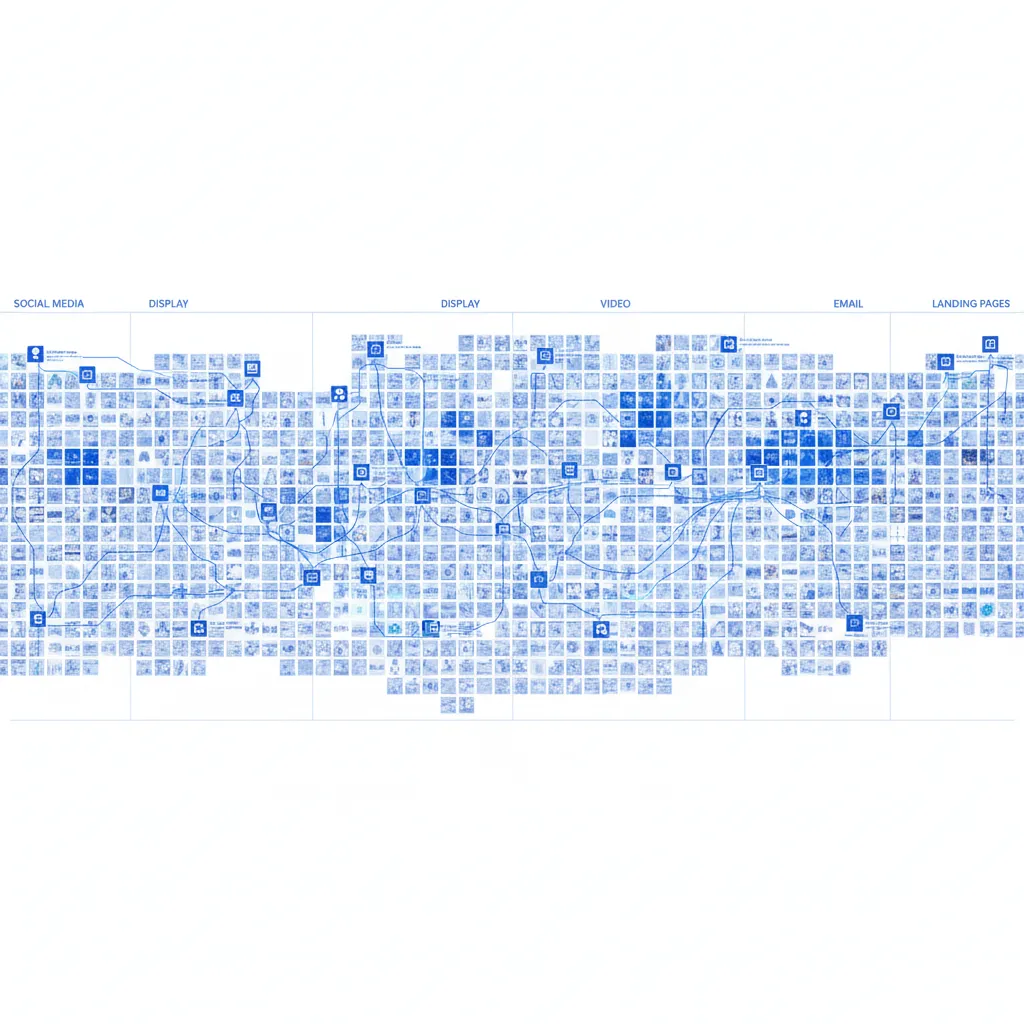
At five hundred creatives in rotation, a spreadsheet still works. At two thousand, it bends. At eight thousand, across multiple sources, with compliance approval gates, it has collapsed three times this quarter and each collapse cost the team a launch day.
The first instinct is to find a better spreadsheet. Or a Notion database. Or an Airtable. We’ve watched teams cycle through all of these. The collapses keep happening, just on different platforms. The problem isn’t the tool. It’s that creative management has become real infrastructure and the team is treating it as a project tracker.
What “infrastructure-grade” actually means here
There’s a level of operational maturity at which creative management has to be a system, not a process. The tell is a few simple questions:
Can someone tell you, in less than thirty seconds, which version of a creative is live on a specific traffic source right now?
If a senior media buyer leaves, can the team find out within a week what they had pending in compliance approval?
When a regulator asks “what creative was running in Q2 of last year for this offer,” can you answer? Quickly?
Most teams can answer none of these. Their spreadsheet has become a graveyard of half-truths layered with informal Slack updates. The graveyard isn’t the problem either. The lack of a memory architecture for creatives is.
What the teams that scale this look like
They’ve made a few choices most teams haven’t. We won’t lay out the architecture — that’s part of what we do for clients — but the choices are visible in how the operation feels.
Approval is gated, not requested. A creative doesn’t go live because someone sent a Slack message saying it’s approved. It goes live because it’s been moved through an approval state in the system. The distinction sounds small. It changes everything.
Versions are immutable. Updating a creative produces a new version. The old version stays in the library, never deleted. The team can roll back without manual restoration. The compliance team can audit what ran when.
Deployment is a side effect. Approved creatives push to assigned sources without anyone clicking “upload.” The library knows what should be live where. A sync layer keeps reality matching intent.
Audit happens automatically. Every state change writes a row. The team doesn’t maintain the log. The system does.
These aren’t tools. They’re properties. You can’t bolt them onto a spreadsheet.
What it costs to keep operating without this
Three things go wrong, in this order.
Launch days collapse. A creative gets pushed to a source it wasn’t supposed to go to. Or the wrong version goes live. Or the compliance approval doesn’t propagate. The team spends six hours debugging which spreadsheet is right.
Compliance becomes a permanent overhead. A regulator request takes a week to answer instead of a morning. The team starts holding back on aggressive testing because they can’t track what’s running.
Memory leaves with people. A creative producer quits. The team realizes they don’t know which versions she had approved, which were pending, which she’d flagged as broken. The work that’s left behind is partial information layered with assumptions.
The fix isn’t a better spreadsheet. The fix is moving creative management out of the spreadsheet entirely. Most teams realize this around the two-thousand-creative mark. The ones that don’t realize it are the ones the collapses are happening to.
— AffiliateTech Engineering